 El Coco
 Decide where the video will run before you call anyone. Then hire the company that quotes a list of finished cuts, with captions in the price and the license in writing. For a small business, one good shoot cut into many short pieces will do more work than one polished brand film.
Start with where the video will run
A request for "a video" can't be priced, and it can't be compared. A hotel's home page wants a wide piece of a minute or so. Instagram Reels and YouTube Shorts want something vertical and much shorter, with words a viewer can read on a muted phone. Those are two edits, and sometimes two ways of holding the camera on the day.
So write the list before the first call. Every place the video will live goes on it, with a length for each and what a viewer should do next. Book a room. Call about a listing. Send the same list to every company you talk to. The quotes that come back will then line up item by item, and the gaps in each one show.
Skip the list and each company quotes its own idea of the job. One prices a single film. Another prices five clips. You end up comparing prices for different things.
What video production costs
A social media video will cost from $1,000 to $5,000 and a corporate video at $5,000 to $20,000. A training video lands between $2,000 and $8,000. Crew size moves those numbers more than anything else, with shoot days, locations and the count of edited versions close behind. Post production takes 30 to 40% of a typical budget.
Quotes arrive in two shapes. One is a day rate for the crew plus hours for the edit. The other is a fixed fee for the whole job. Ask for the fixed fee. You know the number before anyone picks up a camera, and a slow edit stays the editor's problem. With hourly billing, every extra round of changes lands on your invoice.
Team size should follow the job. Scripted work with actors and several locations needs a full crew, and an agency earns its fee there. A property tour or a run of social clips needs one or two people who can shoot and edit. Paying for a bigger crew than the job needs buys nothing you can post.
Most small businesses and owners can skip the brand film for now. A two minute film gets posted once. Footage you can post most weeks for a few months keeps working long after the shoot.
Ask how many pieces come out of one shoot
A quote that says "one video" leaves out the thing you are paying for. Ask the company to list every finished piece, with its shape and length.
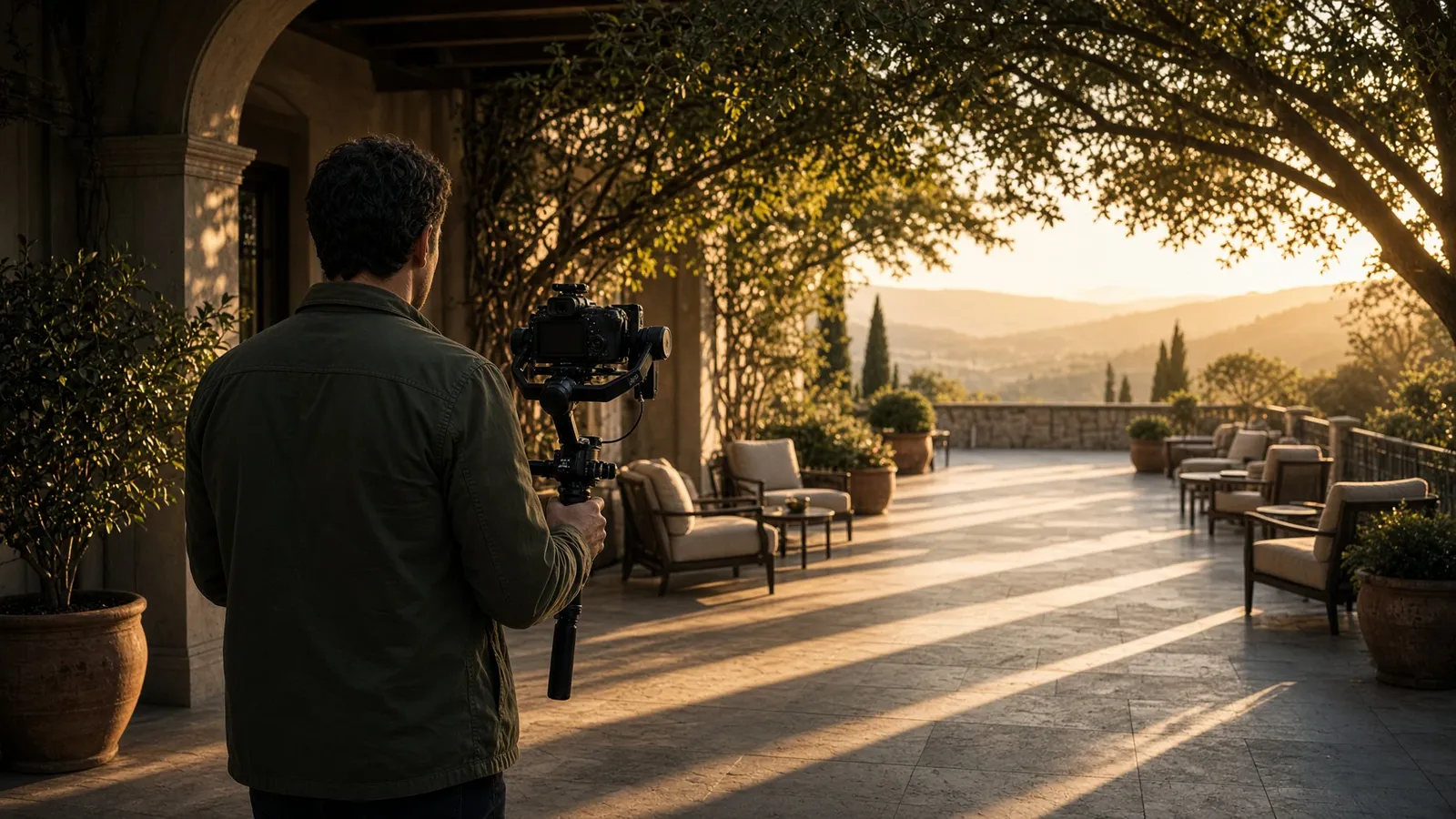
One shoot can be cut many ways. We cut ours into Shorts, Reels and stills, and on a property the same visit also gives a horizontal piece for the web. The shoot day costs about the same whether it ends as one film or a folder of clips you can post for weeks. Editing time is what grows. So the cost per usable piece drops fast when the shoot is planned for many outputs from the start.
Ask for two versions of anything that carries a logo. A branded cut can live on the company's own feature page. An unbranded cut, with no studio logo or contact details, is the one you can use anywhere: a listing site, a new agent, your own channels. Without it, every new use means paying for a re-edit.
Get captions in the base price
A lot of video is watched on mute. In a 2019 survey of 5,616 US adults by Verizon Media and Publicis Media, 69% said they watch video with the sound off in public places. A quarter do the same in private. A Short that needs audio to make sense loses those viewers in the first second. Captions win them back.
The same clip, sound off
Most people scroll muted. Captions carry the message when the audio can't.
to the
beach Three bedrooms, ocean view
69%of US adults watch video with the sound off in public
Verizon Media and Publicis Media survey of 5,616 US adults, 2019.
Captions done well take real editing time. Each video has karaoke style captions burned into the picture, so the current word lights up as it is spoken. They also carry transparent overlay insets that show title information (for example: number of rooms, proximity info, key features). Every caption has to land on its word, and every inset has to appear on the right cue. A viewer with the sound off still gets the key data.
That is why captions should be named in the quote. If they are billed later as an extra, the price you compared was not the price you pay. Ask to see a captioned piece the company has already made, and check it on a muted phone.
Ask who keeps the footage
Read the license before you read the price. In most production agreements the client gets a license to the finished cuts, and the company keeps the raw footage and project files. That default is fine. The trouble starts when nobody writes the terms down. A year later nobody knows if the clip can run as a paid ad or go to a new agent.
A written license can be short. This is the one we use for property work:
- The studio keeps the masters.
- The owner gets a perpetual personal license. It does not pass to the buyer when the property closes.
- An agent gets a limited release that ends with the listing agreement.
- If the property sells again later, the footage can be re-licensed at a reduced rate in place of a reshoot, unless the property has changed.
Four lines answer the questions that cause fights later. Who can use it, for how long, and what reuse costs. Ask for the same from anyone you hire. If you might boost a clip as a paid ad, raise it before you sign. Some companies license ad use separately from organic posts, and adding it later means a second negotiation.
Before you sign
Ask for one full project from start to finish, along with the reel. A reel is the best few seconds of many jobs. Watch the full project the way your customers will, on a phone with the sound off. If the captions cover a face or an overlay hides the thing it points at, you will see it in seconds.
Then ask when the files arrive and in what format. You want files you can download and keep, each cut as its own file, ready to post. A date in writing matters most when the video has to be live for a launch or a listing.
Questions for the first call:
- What finished pieces do I get, in which shapes and lengths?
- Are captions in the price?
- How many rounds of changes are included?
- Who keeps the raw footage, and what does my license cover?
- Can I use the cuts in paid ads?
- When do I get the files, and in what format?
Property owners and agents can read how this works for a listing in real estate video and social. If aerials are on your list, start with what drone photos do for a listing.
What a video quote should name
Get each line in writing before the shoot.
- Finished pieces and their lengthsA 30-second reel and a 90-second walkthrough are two pieces, not one.
- CaptionsBurned in, styled, and included in the price.
- Rounds of changesHow many, and what a round covers.
- Raw footage and licenseWho keeps the masters, and what you can do with them.
- Paid ad useSome licenses cover organic posts only.
- Delivery date and formatVertical, horizontal, and the files you get.
Questions
How much does a video production company charge?
Costs go from about $1,000 for a social piece to $20,000 for a corporate video. Crew size and the number of edited versions move it most.
Do I get the raw footage?
Usually not by default. Most companies license the finished cuts and keep the raw files. If you want the raw footage, ask before you sign and get the price in writing.
Should captions cost extra?
On vertical video, ask for them in the base price. A Short is often watched muted, so the captions carry the message. In a Verizon Media and Publicis Media survey, 69% of US adults said they watch with the sound off in public.
Can one shoot cover my website and social media?
Yes, if you plan for it. Tell the company every place the video will run before the shoot day. Vertical and horizontal framing need different choices on location.
Most owners would rather spend their days on the product or service they sell. We pull the shoot, the edit, the captions and the license together behind the scenes, so the most eyes land on that product.