 El Coco
 Hire a real estate videographer who delivers drone, video and stills from one visit, cut for the listing and for social. Ask for a branded and an unbranded version. Get the footage rights in writing, including what happens when the property sells and when it sells again.
One visit, several jobs
The easiest way to judge a videographer's offer is to follow one property from the shoot day to its next sale, and ask what the footage is doing at each step.
On the day, the visit has to feed the listing page, the website, social media and the listing photos at once. That means a horizontal piece for the web, vertical cuts for Instagram Reels, YouTube Shorts and TikTok, and stills. If those come from separate bookings, you pay for the travel, the setup and the light twice. Ask for all of it from one visit.
Ask for the lengths too. Published service pages give a social reel 15 to 30 seconds, a walkthrough 60 to 90 seconds, and a cinematic film two to three minutes. A quote that names each cut and its length is one you can hold the videographer to. More on what aerials are worth is in what drone footage does for a listing.
Ask for a branded and an unbranded cut
Every property we film gets two versions of the edit:
- Branded cut — carries a logo and lives on a feature page.
- Unbranded cut — no studio logo or contact details. The owner or agent can use it anywhere.
The unbranded file is the one that protects you. Listings change hands. An owner may sign with a new agent halfway through, or list again in a few years. A video with someone else's logo and phone number baked in can't follow the property. Without an unbranded cut, each of those moments means paying for a re-edit or living without the video.
Ask for aerials that show where it is
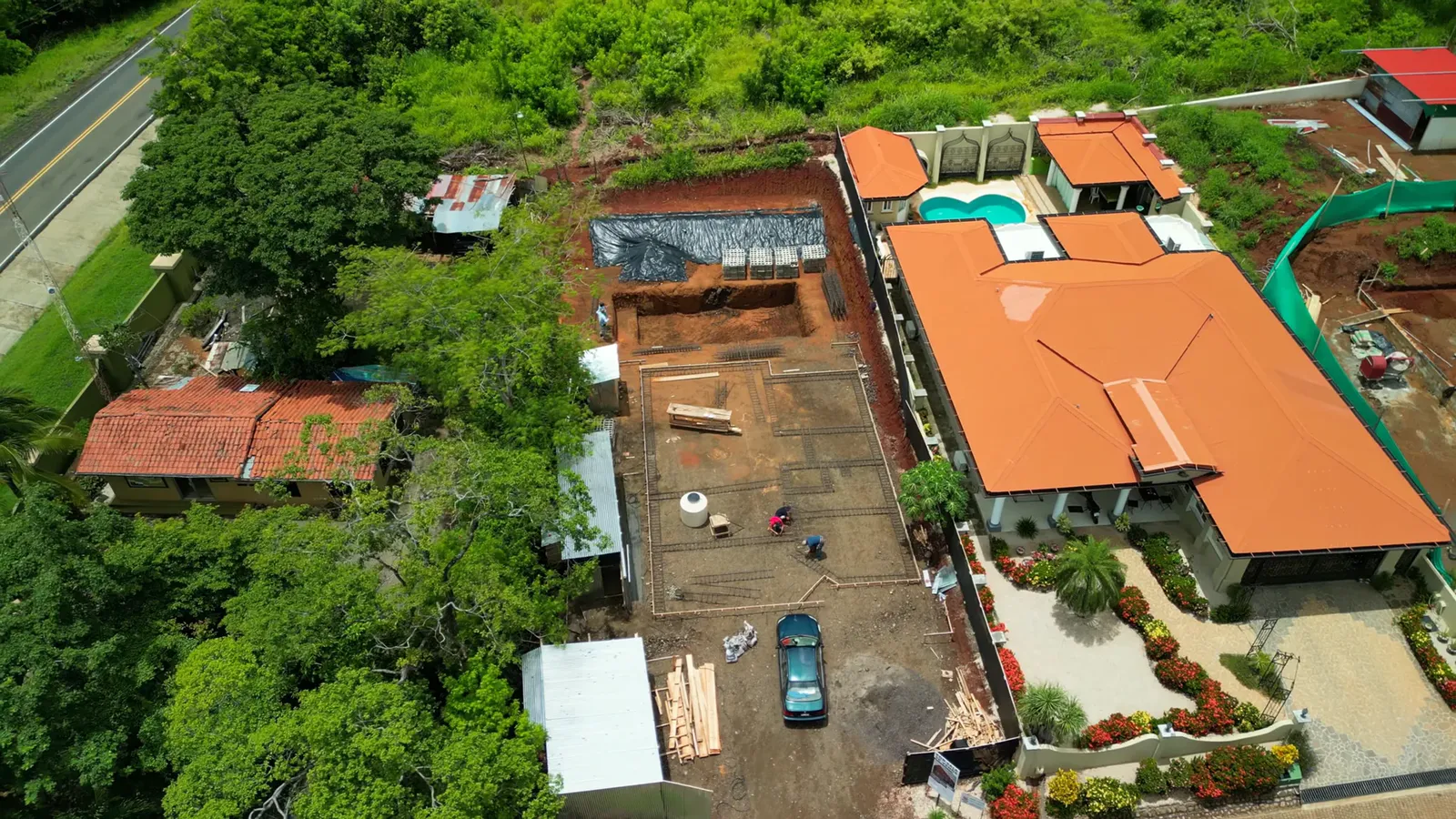
A buyer scrolling a listing from Toronto or Denver can't tell where the house is or what is around it. Ground footage shows the kitchen. A drone shot shows the beach, the road in, the hills behind and the neighbours, all in one frame. That context is what aerials are for.
We go one step further and build on screen markers into the footage. They show the distance from the property to the places a buyer asks about first: the beach, the town, the airport. Ask the videographer you hire whether they can add markers like these. They answer the "how far is it to..." question before anyone has to email it. A videographer understands the target client and what they're thinking while they watch.
Ask for drone stills too. A single frame that shows the entire property is a shot clients love. It works as a listing cover, a social post and a printed flyer.
What it costs, and the commission math
A basic video walkthrough typically costs $200 to $500, and a video with drone footage or an agent on camera at $800 to $2,500 or more. Most videographers price by square footage or bedroom count. Those are US numbers. Get at least two local quotes against the same list of cuts before you decide what is fair.
For owners, the footage can pay for itself before the listing goes live. Say you hire a $1,000 media package before you choose an agent. When you sign, your line is short. "We already have our footage. Knock 0.5% off commission." On a $400,000 sale, 0.5% is $2,000, which is twice what the package cost. Whether an agent says yes is up to the agent. The numbers are worth putting on the table.
That math only works if you hold usable footage. An unbranded cut and a written license are what make it yours to bring.
While it is listed: the social posts
Fit Small Business compared social media services for realtors and found monthly prices from about $12 for a basic posting tool to $500 and up for a managed account. Those services schedule and publish. The footage of your actual property still has to come from somewhere.
That is why the shoot matters more than the scheduler. The vertical cuts become Shorts and Reels. The stills fill the posts between them. Spread out, one visit gives an owner or agent weeks of posts about one property. Before you book, decide who will post them. If the videographer only hands over files, someone on your side needs the time to post every week.
Ask for captions on the vertical cuts. In a 2019 Verizon Media and Publicis Media survey of 5,616 US adults, 69% said they watch video with the sound off in public places. A muted clip with no on screen captions says very little to them. On the Shorts we edit, karaoke style captions are burned into the picture and overlay insets. A property clip can carry the room, the view or the walk to the beach the same way. Our guide on hiring a video production company has the full list of questions to ask.
When it sells
Ask what happens to the video at closing. On El Coco Properties, our real estate news site for Playas del Coco, a feature post gets a SOLD overlay and credits the closing agent. The post stays up. While the property is for sale, the contact on that post routes to whoever holds the listing at the time. If the owner changes agents, the inquiries follow the listing. Nobody has to chase a page that still points at an agent who has left.
A feature page is worth asking for, but keep your expectations in proportion. A page about one specific place gets found within months, and a broad term on a young site stays on page 4. So a feature page is more likely to be found for the place it names than for the words "real estate".
If it sells again: who owns the video
Video outlives the listing it was made for. Agents change, and owners sell again years later. So the license matters as much as the edit. Ours is short, and any videographer should be able to give you something this clear:
- The studio keeps the masters.
- The owner gets a perpetual personal license. It does not pass to the buyer at closing.
- An agent gets a limited release that ends with the listing agreement.
- On a later resale, the footage can be re-licensed at a reduced rate in place of a reshoot, as long as the property has not changed.
The last line is the one that saves money. A reshoot means a new booking, a new visit and a new edit. Re-licensing footage you already paid for skips all three. It only makes sense when the house looks the same. If the owner adds a pool or redoes the kitchen, the old footage is wrong. Then a new shoot is the better buy.
Whoever you hire, find out who keeps the raw files, whether your license ends with the listing, and what reuse costs.
Questions
How much does a real estate videographer cost?
A basic walkthrough at a few hundred dollars and a video with drone footage at $800 to $2,500 or more. Get local quotes against the same list of cuts.
What is the difference between a branded and an unbranded video?
A branded video carries a logo or contact details. An unbranded one has none, so it can follow the property to any agent or listing site.
Can the same shoot be used for social media?
Yes, if the videographer plans for it. Vertical and horizontal shots need different framing on the day.
Who owns the listing video after the house sells?
That depends on the contract, so ask before the shoot. One clear setup: the studio keeps the masters, and the owner gets a personal license that does not pass to the buyer.
Do I need drone footage for a listing?
Not always. Aerials help most where the land, the view or the distance to the beach sells the place.
An owner or agent has a property to sell and a business to run. We pull the shoot, the cuts, the rights and the feature page together behind the scenes. The aim is simple: the most eyes on that property.